

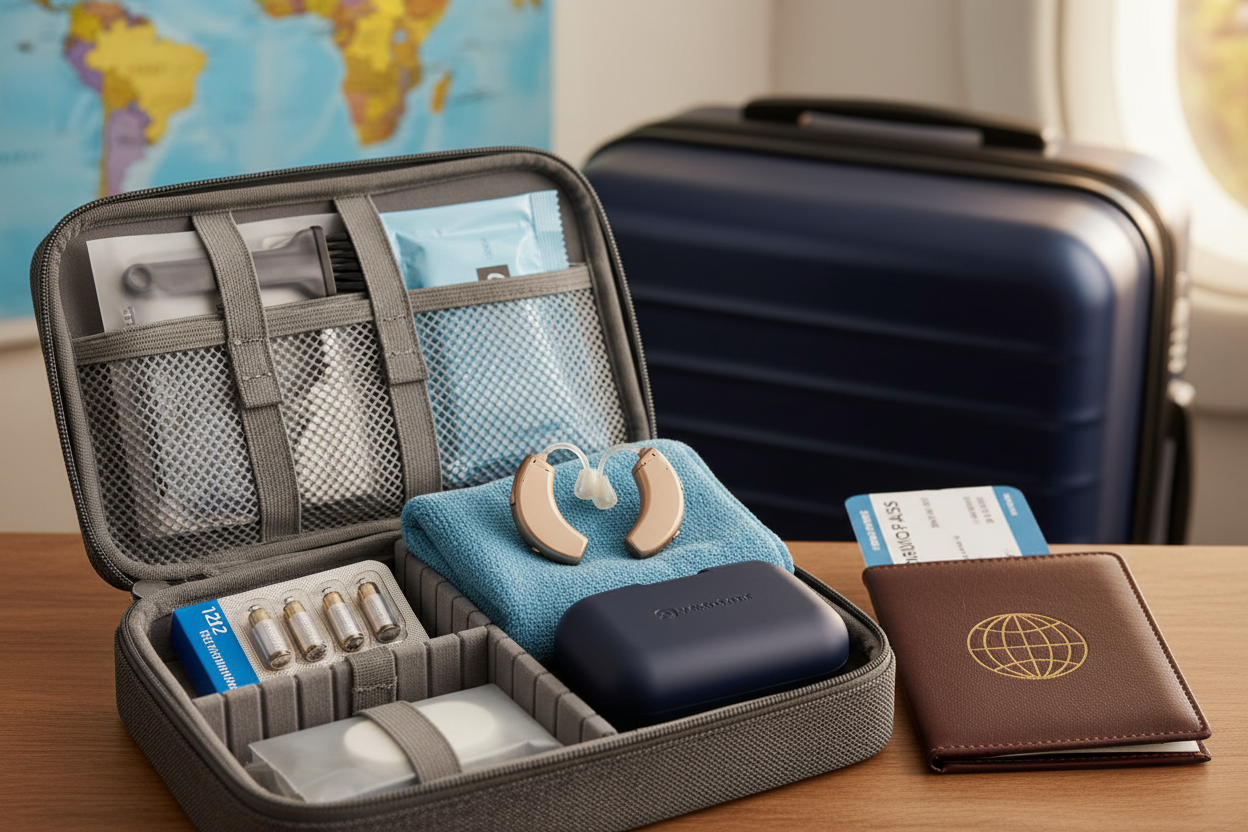
Travel is meant to be exciting, relaxing, and full of discovery—not stressful. For hearing aid users, a successful trip often comes down to preparation. From navigating airport announcements to enjoying conversations in new environments, having the right essentials packed can make all the difference.
This comprehensive travel checklist is designed to help hearing aid users travel confidently, comfortably, and independently. Whether you’re heading out for a weekend getaway, a business trip, or an international vacation, this guide covers what to pack, why it matters, and how to avoid common travel disruptions related to hearing devices.
Why Hearing Aid Users Need a Dedicated Travel Checklist
Hearing aids are small but essential devices. Unlike a phone charger you can easily replace on the road, hearing aid accessories, batteries, and tools aren’t always readily available—especially when traveling internationally or to remote areas.
Travel also introduces new challenges:
-
Changes in climate and humidity
-
Long hours of wear
-
Noisy environments like airports, trains, and hotels
-
Language barriers
-
Limited access to audiology services
A well-planned checklist ensures your hearing aids continue working reliably throughout your trip and helps you stay connected to the people and moments that matter.
1. Your Primary Hearing Aids (and a Backup If Possible)
This may sound obvious, but it’s worth stating clearly: always pack your hearing aids in your carry-on bag, never in checked luggage.
Checked bags can be delayed, lost, or exposed to extreme temperatures. Keeping your hearing aids with you ensures you can hear announcements, communicate with staff, and navigate unfamiliar environments from the moment you arrive at the airport.
If you have an older pair or a spare device, bringing a backup is highly recommended—especially for longer trips or international travel.
2. Extra Batteries or Charging Equipment
For Battery-Powered Hearing Aids
Pack more batteries than you think you’ll need. Travel days tend to be longer, and heavy use—especially in noisy environments—can drain batteries faster than usual.
A good rule of thumb:
-
Bring at least double the number of batteries you’d normally use for the same time period.
Store batteries in their original packaging or a dedicated battery case to prevent accidental discharge.
For Rechargeable Hearing Aids
If your hearing aids are rechargeable:
-
Bring the original charging case
-
Pack the charging cable and power adapter
-
Consider a portable power bank if you’ll be out all day or traveling to areas with limited outlets
Some modern hearing aids, including OTC models, are designed for flexible charging and portability—making them easier to manage on the go.
3. Cleaning and Maintenance Supplies
Travel exposes hearing aids to sweat, dust, sunscreen, makeup, and environmental debris. Packing a small cleaning kit helps maintain sound quality and prevents issues during your trip.
Recommended items include:
-
A soft cleaning brush
-
Wax guards or filters
-
Cleaning wipes designed for hearing devices
-
A microfiber cloth
Daily cleaning while traveling can prevent buildup and reduce the risk of sudden performance problems.
4. A Drying Case or Dehumidifier
Humidity, sweat, and sudden weather changes can affect hearing aid performance. This is especially important if you’re traveling to tropical climates, coastal areas, or places with frequent rain.
A compact drying case or dehumidifier:
-
Removes moisture overnight
-
Helps extend device lifespan
-
Reduces the risk of static, distortion, or temporary failure
Even a simple, travel-friendly drying container can provide peace of mind.
5. Protective Storage Case
Always pack a sturdy, protective case—even if you usually wear your hearing aids all day.
You’ll need a safe place to store them during:
-
Security screenings
-
Swimming or beach activities
-
Showers
-
Sleeping
A hard case helps protect your hearing aids from drops, pressure, and accidental damage in crowded travel settings.
6. Hearing Aid User Information
Having basic hearing aid information on hand can be surprisingly helpful.
Consider packing or saving digitally:
-
Your hearing aid model name
-
Serial numbers
-
Basic usage instructions
-
Customer support contact information
This information can be useful if you need assistance, troubleshooting help, or replacement parts while away from home.
7. Smartphone and Hearing Aid App Setup
If your hearing aids connect to a smartphone app:
-
Make sure the app is installed and updated before you leave
-
Check that Bluetooth connections are working properly
-
Download offline features if available
Some apps allow you to:
-
Adjust volume and sound modes discreetly
-
Reduce background noise
-
Check battery status
-
Access support resources
Having everything set up ahead of time avoids frustration when Wi-Fi or mobile data is limited.
8. Accessories for Better Communication While Traveling
Travel often puts you in acoustically challenging environments. Certain accessories can significantly improve clarity and comfort.
Helpful accessories may include:
-
Remote microphones for group conversations
-
TV or audio streamers for hotel rooms
-
Noise-reduction settings or presets for public spaces
Even without additional accessories, knowing how to switch between listening modes can improve your experience in airports, restaurants, and transit hubs.
9. Travel-Friendly Hearing Protection
While it may seem counterintuitive, hearing protection is still important for hearing aid users.
Pack ear protection if you’ll be exposed to:
-
Loud transportation hubs
-
Concerts or festivals
-
Industrial tours
-
Busy urban environments
Some hearing aid users choose to temporarily remove their devices and use hearing protection in extremely loud settings to avoid discomfort or distortion.
10. Written Communication Tools
In unfamiliar environments—especially where accents or languages differ—having alternative communication tools can be helpful.
Consider packing:
-
A small notebook and pen
-
A notes app on your phone
-
Pre-written phrases or explanations, such as “I use hearing aids—please speak clearly”
These tools can reduce stress and help ensure smooth interactions with hotel staff, drivers, or service personnel.
11. Travel Insurance and Warranty Awareness
Before traveling, review:
-
Your hearing aid warranty coverage
-
Any applicable travel insurance protections
Some plans may cover loss or damage during travel. Knowing this in advance helps you make informed decisions and reduces anxiety if something unexpected happens.
12. Comfort and Self-Care Essentials
Travel days are long, and wearing hearing aids for extended periods can sometimes cause fatigue.
Pack items that support comfort:
-
Skin-safe wipes to clean the area around your ears
-
Small amounts of hearing-aid-safe moisturizer if recommended
-
Break reminders to remove your devices briefly when appropriate
Comfort plays a major role in how well you hear and enjoy your trip.
Common Travel Questions from Hearing Aid Users
Can I wear hearing aids through airport security?
Yes. Hearing aids can be worn through metal detectors and body scanners. If you’re unsure, inform security staff before screening.
Should I remove hearing aids during flights?
Most users keep their hearing aids on during flights, especially to hear announcements. If cabin noise becomes uncomfortable, adjusting volume or switching modes can help.
What if my hearing aid stops working while traveling?
This is why packing backup supplies, cleaning tools, and support information is essential. Many issues are related to moisture, wax buildup, or battery depletion and can be resolved quickly with the right tools.
Traveling Confidently with Hearing Aids
Travel should expand your world—not limit it. With thoughtful preparation and the right checklist, hearing aid users can explore new destinations, connect with people, and enjoy every moment with confidence.
Modern hearing aids, including over-the-counter options, are designed with portability, ease of use, and real-world travel scenarios in mind. When paired with smart packing and proactive planning, they empower users to travel independently and comfortably.
Before your next trip, revisit this checklist, customize it to your needs, and enjoy the journey—fully connected to the sounds that make travel memorable.

Compartir:
Seasonal Care: Protecting Hearing Aids in Hot Summers and Cold Winters
How to Exercise Safely While Wearing Hearing Aids