

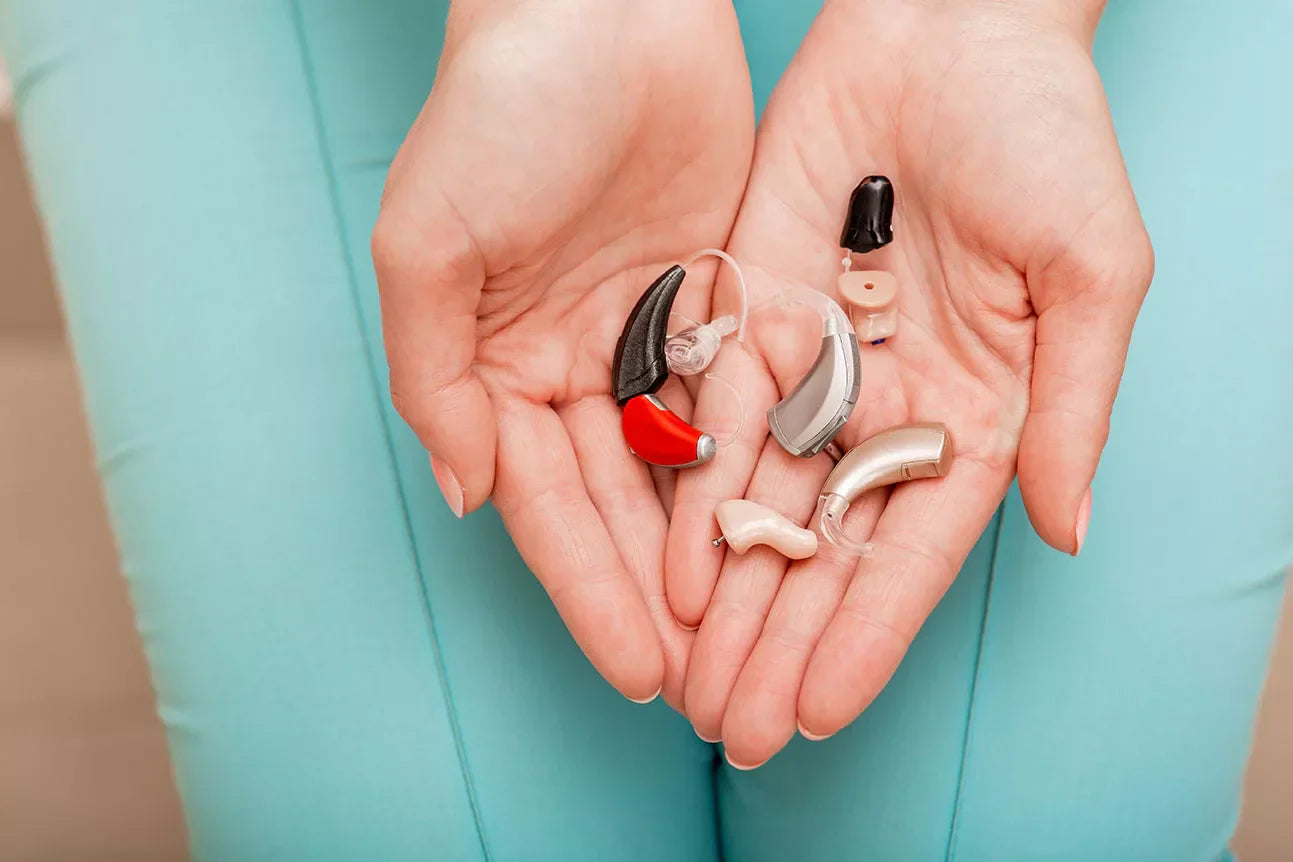
1. Understanding In-Ear Hearing Aids
What Are In-Ear Hearing Aids?
In‑Ear Hearing Aids (often referred to as ITE) are custom-fitted devices designed to sit within the outer portion of your ear, known as the concha. These devices are individually crafted to match your ear’s anatomy, offering a discreet and comfortable form of hearing enhancement.
2. Types of In-Ear Hearing Aids
HearingLife identifies five subtypes of in-ear hearing aids: from the nearly invisible (Invisible-in-Canal) to the more visible full shell ITE style. Verywell Health also outlines six main types of hearing aids, including ITE and its variants:
|
Style |
Description |
Ideal For |
|
Sits fully in outer ear with custom shell. |
Mild to severe hearing loss; users who want ease of handling and extra features. |
|
|
ITC (In-The-Canal) |
Partially fits in ear canal. |
Users wanting a balance of discretion and functionality. |
|
CIC (Completely-In-Canal) |
Almost invisible, deep in canal. |
Discreet users with mild-to-moderate loss and good dexterity. |
|
IIC (Invisible-In-Canal) |
The most hidden option. |
Users prioritizing aesthetics; suitable for mild-to-moderate hearing loss. |
|
Extended-Wear (Lyric) |
Inserted deeply, worn for months. |
Active users desiring continuous, hands-off hearing without daily handling. |
3. Benefits of In-Ear Styles
-
Discretion & Aesthetic Appeal – With no visible wires or tubes, ITE styles are subtle and minimally intrusive.
-
Custom Fit & Comfort – Each device is tailored to your ear's shape, leading to better comfort and improved acoustic seal.
-
More Space for Features – Compared to ultra-small designs, ITE devices can include volume controls, memory buttons, and telecoils.
-
Sound Quality – These devices allow the ear's natural acoustics to enhance sound, and their close fit helps reduce feedback.
-
Extended-Wear Convenience – Lyric devices offer uninterrupted hearing for months, ideal for active lifestyles.
4. Considerations Before Choosing
-
Battery Life & Maintenance – Smaller devices (CIC, IIC) use tiny batteries with shorter lifespans; extended-wear models are replaced professionally.
-
Handling Challenges – Very small aids may be difficult to insert or adjust, especially for users with dexterity limitations.
-
Visibility & Occlusion – Larger ITE units may be visible; deeper canal insertion may create a “plugged ear” sensation.
Wax & Moisture Entry – Deep canal styles may be prone to clogging, while extended-wear aids must resist moisture and debris. -
Cost & Fitting – ITE aids are generally more expensive than BTE alternatives due to custom manufacturing and fittings.
-
Adjustment Period – Users often need time to adapt to new sounds and find the right fit. Regular audiologist adjustments are vital.
5. Features & Technology
Modern in-ear aids utilize advanced digital processing to enhance user experience:
-
Multi-Channel Processing – Enables fine-tuned amplification across frequencies, improving clarity.
-
Noise Reduction & Feedback Suppression – Enhances comfort in noisy environments and reduces whistling.
-
Directional Microphones & Telecoils – Help focus on conversation and improve sound in public venues.
-
Wireless and Bluetooth Connectivity – Some models support direct audio streaming from smartphones and TVs.
6. Choosing the Right In-Ear Hearing Aid
Consider these steps for selecting the best fit:
-
Assess Your Hearing Needs – Consult an audiologist for a hearing test to determine the severity and frequencies affected.
-
Prioritize Your Values – Decide between discretion (CIC/IIC), ease of use (ITE), continuous wear (Lyric), or rich features.
-
Evaluate Lifestyle Factors – If active or sporty, extended-wear options may be attractive; if visibility matters, deeper canal styles might suit.
-
Plan for Budget & Maintenance – Balance upfront cost with long-term usability, warranty, and care requirements.
-
Trial Fitting – Many providers offer trials—testing various styles allows you to experience real-world comfort and performance.
7. After You Get Your In-Ear Aid
-
Adapt Gradually – Start with brief usage periods, gradually increasing as you acclimate.
-
Attend Follow-Ups – Regular adjustments ensure the device stays effective and comfortable.
-
Keep It Clean – Especially with deeply placed aids, maintain hygiene to prevent blockage or damage.
-
Stay Informed – As technology evolves, newer features like AI-based sound processing and rechargeable options may become available.
8. Summary & Takeaway
In-Ear Hearing Aids offer a diverse array of styles—from discreet invisible devices to feature-rich shells and continuous-wear options like Lyric. They fuse aesthetics with advanced technology, catering to individual hearing needs and lifestyles.
To find the best match:
-
Start with a professional hearing evaluation.
-
Explore device styles and consider your preferences for discretion, ease of use, and technological features.
-
Use trial periods, and engage in follow-up adjustments to get the most benefit
Let OKB Hearing guide you through this selection journey—with expert support and custom solutions.
Let us help: https://okbhearing.com/pages/contact



Share:
10 Key Things You Need to Know About Medicare Coverage for Hearing Aids
Medicare and Hearing Aids: What You Need to Know About Online Purchases